Crawl space mold remediation in Franklin, TN is for homeowners who can see growth on joists, sill plates, or fallen insulation and want it removed without leaving the crawl wet enough to grow it back. Franklin Crawl Space cleans the affected wood and hauls out material that cannot be cleaned, then pairs that work with humidity control—and with crawl space encapsulation when vents are still importing summer air—so the cleaning survives a Williamson County summer.
Crawl space mold remediation in Franklin is the removal of growth from the materials that have it, and the cleanup that keeps that debris from becoming the next layer of dust on the joists. Insulation and other porous material that cannot be cleaned come out of the crawl and leave the property. Sound wood is cleaned without soaking the framing. The hatch is the control point so debris is not tracked through the kitchen, and the air handler is considered so the return is not pulling the work zone into the bedrooms. Photos before and after are part of the job when a sale is open and when it is not.
Remediation is not paint over growth, a fogger in a wet crawl, or bleach left to flash off. It also does not pretend the humidity that fed the mold has been solved. If vents and soil vapor are why the joists stay damp, crawl space encapsulation is how the space stays cleaned. If the driver is a leak, a condensate line, or an uncovered floor, humidity control is the paired service. Fallen, moldy batts are removed rather than saved; putting insulation back is crawl space insulation, specified for the thermal boundary after the crawl is dry.
Signs you need crawl space mold remediation
You need remediation when growth is visible on joists, girders, sill plates, the paper face of insulation, or the cool side of ducts. A single musty afternoon is a reason to open the hatch, not a finding by itself. In Middle Tennessee crawls the growth often looks like dark spotting or a gray film on wood, and like black staining on batts that have fallen. We photograph what is there. We do not diagnose an illness from a joist, and we do not sell a treatment for dirt that wipes off.
An inspection report that says microbial growth or a mold-like substance in a Franklin or Brentwood crawl is a prompt for this scope, after we confirm it in person. If the wood is soft, the issue has moved past the surface and into Crawl Space Repair. If the crawl is wet and the wood is clean, start with humidity control and skip a remediation line you do not need. We would rather delete a scope than clean wood that is only damp.
Why mold grows in Franklin crawl spaces
Mold grows in Franklin crawl spaces because the wood stays damp long enough to colonize. The damp comes from humid outdoor air pulled through foundation vents, from vapor leaving clay soil, and from leaks and sweating ducts. Summer air in this part of Tennessee often holds enough moisture to condense on cool joists and metal ducts. Organic dust and the paper on fiberglass batts give the growth a surface. None of that requires a flood. A crawl that is merely humid for weeks can spot the same way a crawl with a puddle can.
The reason it returns after a cleaning is the same list. A spray does not change the dew point, the vents, or the bare soil. A downtown pier-and-beam house and a Westhaven crawl grow mold for the same moisture reasons and different access reasons. Remediation lasts when the moisture path is closed and relative humidity is held down afterward. That is why this work sits next to humidity control and, when the building needs it, encapsulation.
What affects crawl space mold remediation cost
Mold-remediation cost in Franklin follows how much material is affected and how hard it is to reach. Spotting on a few joists near a sweating trunk is a smaller cleaning than growth across the bays, on the sill, and through insulation that has been on the ground for years. Clearance, pier layout, and hatch access change the hours. Control at the hatch, and the volume of insulation and debris that has to leave the property, change it again. A house under contract may need a tighter photo record and a schedule that fits the closing. Those are scope facts, not a rate card waved from the driveway.
The number also moves with the work that keeps the mold from coming back. Drying equipment, a liner, closed vents, and a dehumidifier are humidity control or encapsulation, priced as those services. Replacing insulation that was removed is crawl space insulation. Soft wood is repair. We do not fold all of that into one mold-treatment line. A buyer, a seller, and the next inspector need to see what was cleaned and what changed about the water.
Clean, remove, or DIY
Clean wood that is structurally sound. Remove insulation, cardboard, stored debris, and porous material the growth has taken over; those items do not clean back to a reliable surface. Replace framing only when repair work finds the section is gone. Mold on the surface is not automatically a new joist. Do not coat active growth with a sealer and call it remediated. The coating locks the condition in place and gives the next inspection less to trust.
DIY bleach is the wrong tool on porous crawl-space wood. It wets the framing and leaves the humidity untouched. Disturbing growth and then running the air handler can pull debris from the hatch into the house. Professional remediation sets the hatch, removes what has to leave, cleans what can stay, and writes the moisture scope beside it. We do not promise that mold will never return in this climate. We specify the cleaning and the humidity system that makes a return unlikely. A promise of a lifetime mold-free crawl, with the vents left open over Franklin clay, is not a scope of work.
Photos from crawl space mold jobs
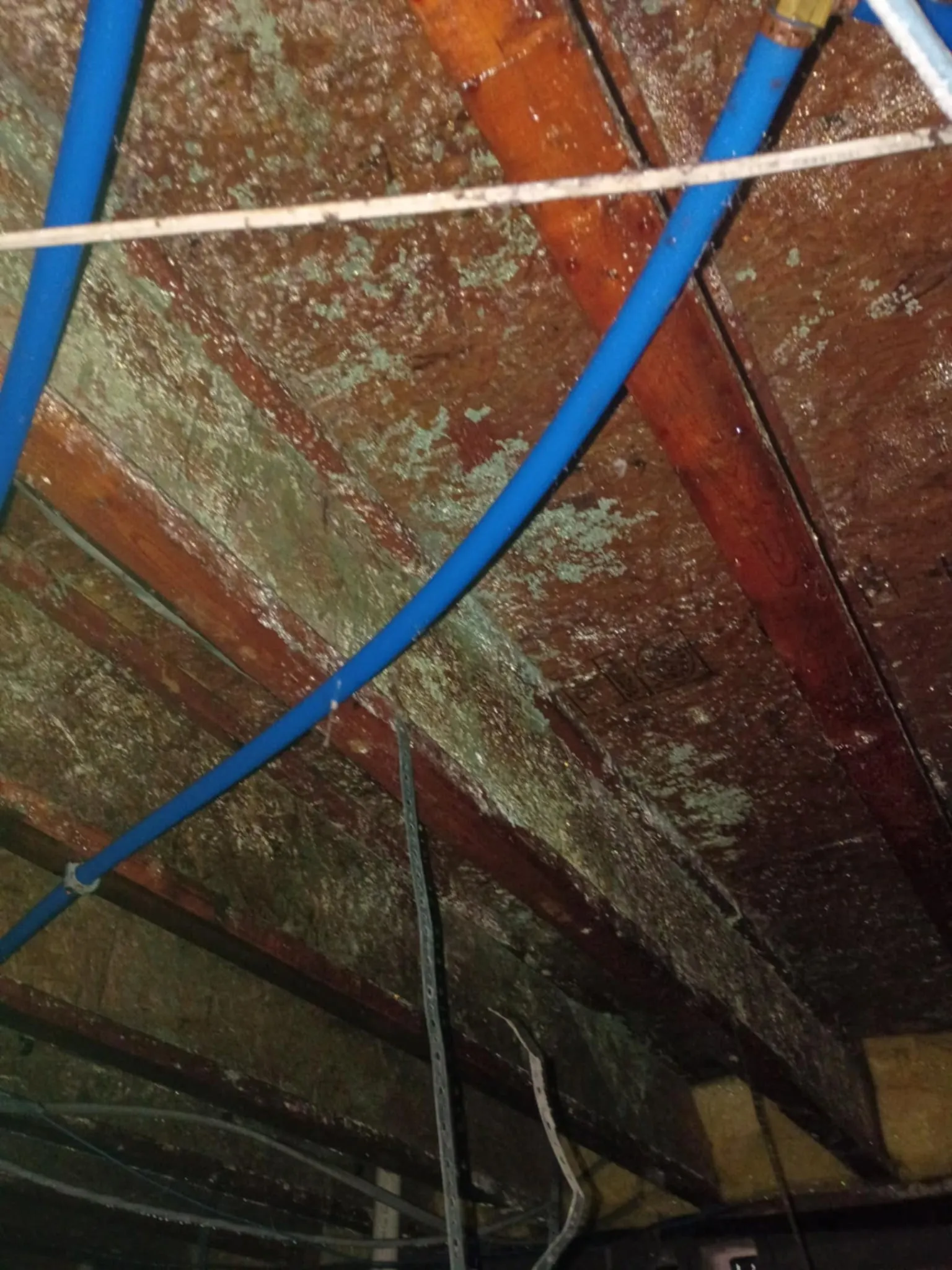
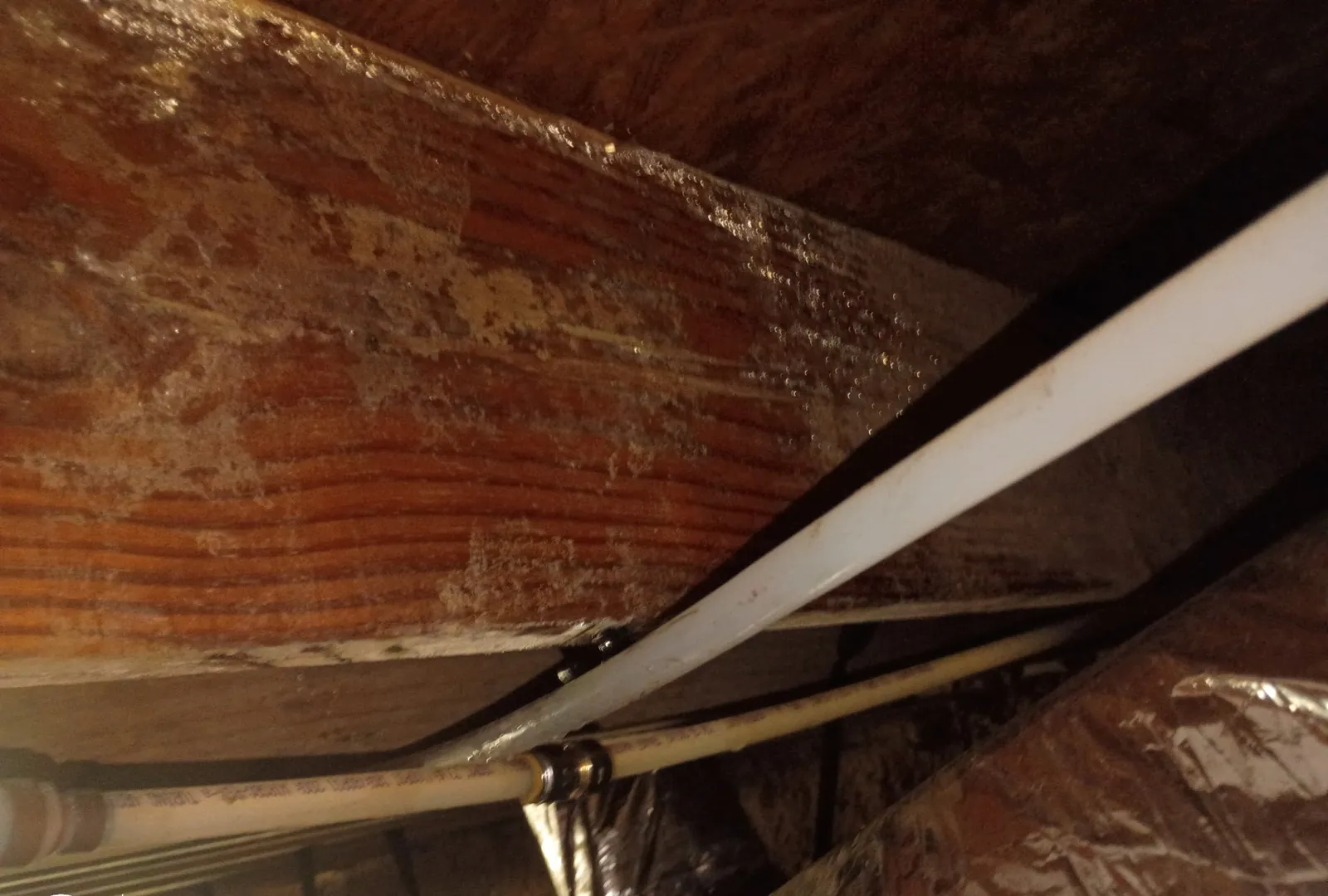
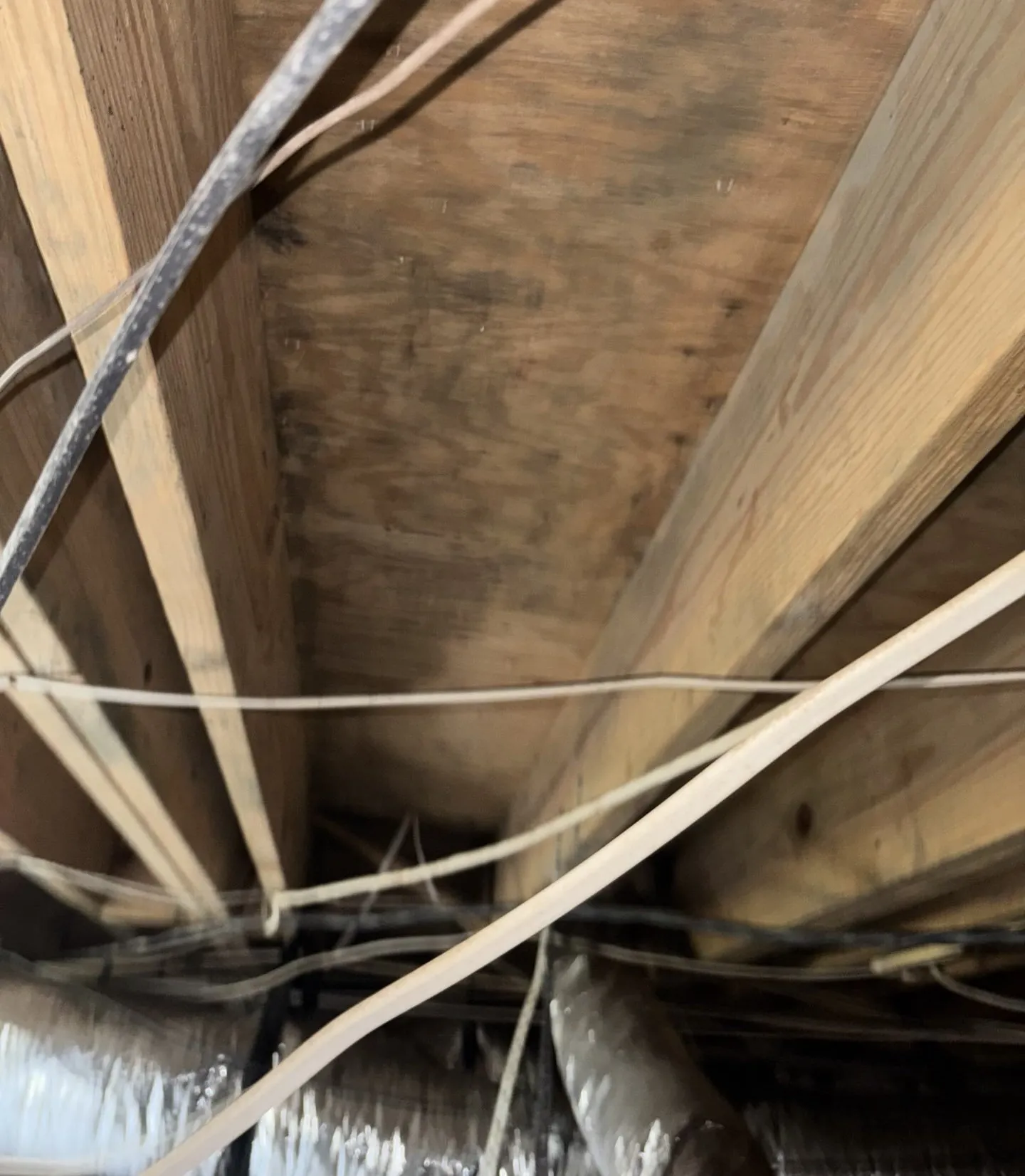
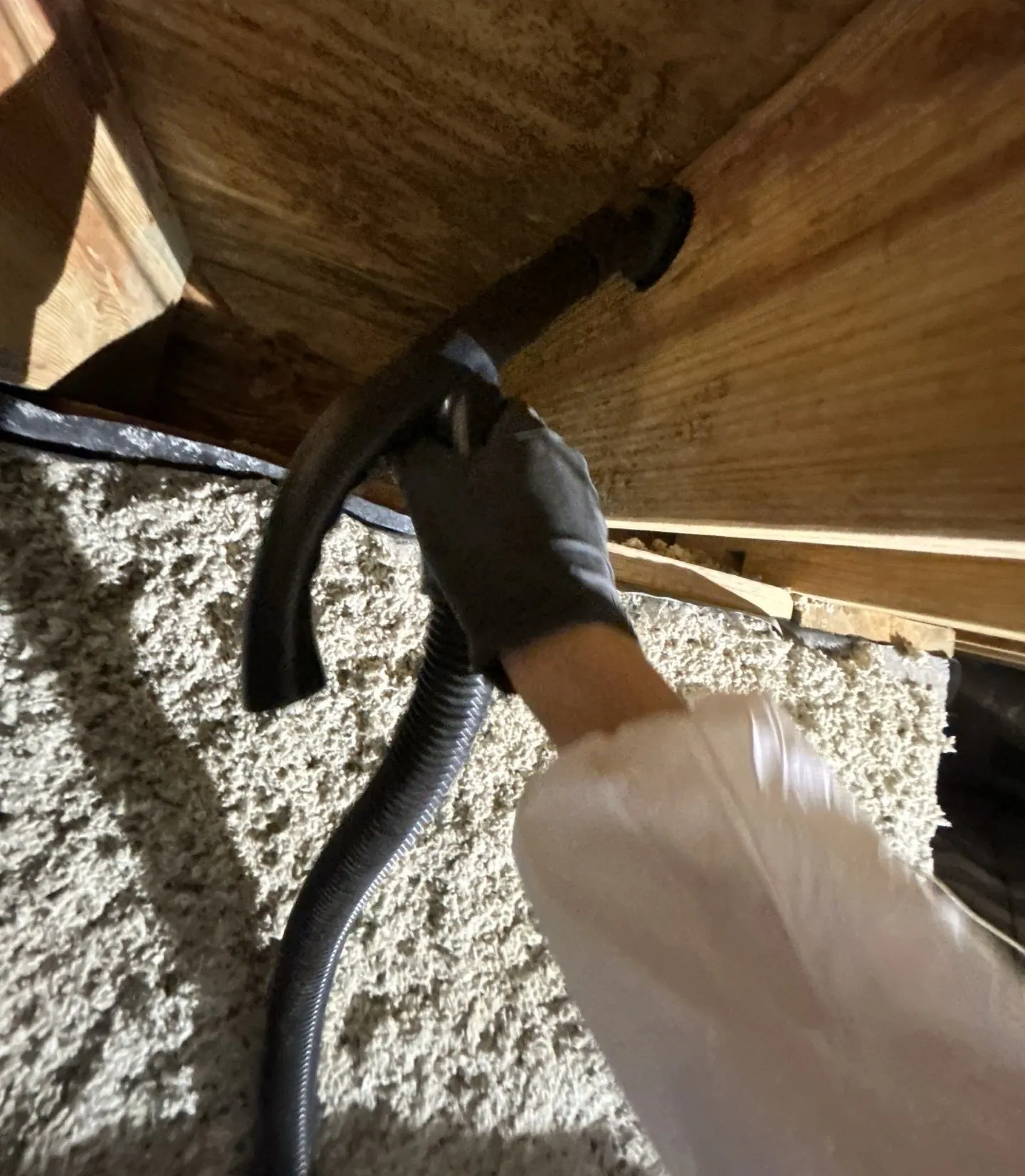
These are photos from real crawl space jobs our crew has worked. They show the kind of growth and cleanup this page describes.
Mold growth across the subfloor sheathing and joists of a crawl space.White mold growth on the face of a floor joist.Dark staining on the subfloor between joists. Photo from a Spring Hill area job.HEPA vacuuming a joist during mold remediation. Photo from a Spring Hill area job.
FAQ
Crawl Space Mold Remediation questions
Is bleach the right treatment for crawl space mold?
No. Bleach on porous wood wets the joists and does not remove the humidity that grew the mold. Franklin Crawl Space removes contaminated insulation and debris, cleans wood with a method that does not soak it, and writes a drying plan beside the cleaning. A spray-only visit on a wet crawl in this climate manages odor for a short time.
Can you remediate mold without encapsulating the crawl?
Yes, when the source was a leak that is now fixed and the space will stay dry. In Franklin that is less common than a vented crawl that will import humidity again in the next humid stretch. We clean without encapsulating when the readings support it. We recommend encapsulation when open vents would put the same joists back in the conditions that grew the mold.
Will the house be livable during the work?
Most crawl space mold jobs leave the living area usable because the work is below the floor. We control the hatch and keep debris off the finish floors. If the air handler needs to stay off for a defined window, or the return needs more isolation because of how it is built, that limit is in the scope before we start. Pets and the return-air path are part of that plan.
Do you guarantee mold will never come back?
No. A humid climate does not support a forever warranty, and we will not print one. We stand behind the cleaning we perform, and we specify the moisture work—vapor control, a drained dehumidifier, and encapsulation when vents are the driver—that makes a return unlikely. If that moisture work is declined, the cleaning is a reset of the current growth.
Can you document remediation for a Franklin home sale?
Yes. Purchase and listing inspections in Franklin and nearby Williamson County regularly flag crawl space growth. We record conditions before and after, and we list the moisture services beside the cleaning using the same service names. Buyers and sellers get a scope they can attach to a contract.