Crawl space encapsulation in Franklin, TN is for homeowners whose vented crawl is feeding humidity into the house—musty floor registers, cupped hardwood, wet insulation, or a home-inspection note—and who want that space separated from soil vapor and outdoor air. Franklin Crawl Space seals a liner to the soil, walls, and piers, closes the foundation vents, details the hatch, and drains a dehumidifier so the wood stays in a dry range through a Williamson County summer.
Crawl space encapsulation is a closed system under the house, not a loose sheet on the dirt. On a Franklin job the liner covers exposed soil, turns up the foundation walls, and wraps piers; seams and pipe penetrations are sealed; foundation vents are closed; the hatch is weatherstripped; and a dehumidifier is piped to a drain. Debris, a failed builder liner, and insulation that is wet or lying on the ground come out first when they would otherwise sit inside the new system. The result is a crawl that no longer exchanges air with July humidity or evaporates soil moisture into the joists.
The liner is a Class I vapor retarder: polyethylene continuous enough to survive foot traffic, a later plumbing call, and the next home inspection. An unsealed seam at a pier is still a hole, so continuity matters as much as thickness. Where wood is soft or a support has dropped, Crawl Space Repair is sequenced before the liner goes down. Growth already on the framing is crawl space mold remediation, done with the cleanup rather than sealed over. Once the capsule is closed, crawl space insulation usually moves to the rim and the walls, because the floor joists are no longer the surface facing outdoor air.
Signs a Franklin home needs encapsulation
Homeowners in Franklin usually need encapsulation when the crawl is still vented and the house is showing it upstairs: musty air at the floor registers, cupped hardwood, a clammy first floor, or a hatch that smells wet in summer. Under the house the matching signs are condensation on ducts, rust on HVAC stands, insulation hanging or on the soil, a torn or missing vapor barrier, damp masonry, and spotting on joists. Relative humidity that stays high after several dry days means the space is not drying itself. A home-inspection note during a Williamson County sale is the same evidence, written by someone else.
One wet corner from a disconnected condensate line is a humidity control repair, not automatically a full capsule. Encapsulation is the right scope when vents still bring outdoor air onto cool wood, the soil is uncovered or the old plastic is in pieces, or the walls are part of the moisture path. If the only gap is a ground cover and the vents are already acceptable, that scope is Vapor Barrier Installation, and the estimate says so.
Why encapsulation fits Franklin houses
Franklin crawl spaces sit in a humid subtropical climate, on soils that hold water, in houses that were often built with foundation vents. Summer air in the Nashville basin, Franklin included, commonly carries enough moisture that its dew point is warmer than cool supply ducts and shaded joists, so water condenses on those surfaces. Open vents were a drying idea from a drier climate. Here they refill the crawl on humid afternoons, on a Westhaven hillside and on a downtown pier-and-beam lot alike.
Williamson County clay keeps releasing vapor after the lawn looks dry, so a bare dirt floor is a continuous source even without a puddle. Lots along the Harpeth corridor add drainage toward the foundation. Houses in Fieldstone Farms, Cool Springs, and Berry Farms often have the air handler and ducts in the crawl, so a sweating supply trunk and a condensate line that misses its drain join the outdoor air. Closing vents and skipping humidity control only traps that moisture. The capsule works because it cuts soil vapor and outdoor air together, then gives a dehumidifier a volume it can hold. Homeowners just northeast of Williamson County are outside the area we schedule; the same closed crawl there is crawl space encapsulation in Gallatin.
What affects encapsulation cost in Franklin
Encapsulation cost in Franklin follows the crawl, not a published package. The estimate reflects footprint, clearance, pier count, and how irregular the foundation is. Downtown stone piers take longer to detail than a rectangular crawl in a newer subdivision. Access and debris matter the same way: a tight hatch, a long carry to the truck, and a crawl full of old plastic, fallen batts, or stored material are labor before any new liner is rolled out. We do not print a starting-price figure. The scope comes after we have been under the house.
The price also changes when other work has to happen first or beside the capsule. Standing water, a sump, or a grading problem is moisture control, not a hidden line inside the liner. Soft joists are repair. Widespread growth is mold remediation. Wet floor insulation that must leave, ducts that need sealing, and a dehumidifier that needs a pump because it cannot drain by gravity are facts about that house. A liner that is still continuous can be repaired at a tear. A shredded 6-mil builder sheet is a replacement. Bedroom count upstairs does not predict which of those you have.
Repair, replace, or DIY
Repair a liner that is still continuous, heavy enough to keep, and only torn or unsealed in specific spots. Replace it when it is the thin sheet that came with the house, lying in pieces, trapping wet insulation, or impossible to seal at the piers and walls. Do not encapsulate over soft wood, a dropped support, or an active leak. That hides the failure and makes the next repair harder. Structural repair, drying, and cleanup come before the finish liner whenever the inspection shows they are needed.
Unrolling plastic is not encapsulation. The usual failure is untaped seams, vents left open, edges that stop short of the wall, and a dehumidifier sitting on a bucket that overflows back onto the soil. The professional scope is the detailing: pier wraps, penetrations, the hatch, a dehumidifier sized to the closed volume with a permanent drain, and the decision to stop for structure or mold first. Power for the unit and a condensate line that actually leaves the crawl are what make the system run in August. When the smaller ground-only job is the honest scope, we write that instead.
Photos from crawl spaces before encapsulation
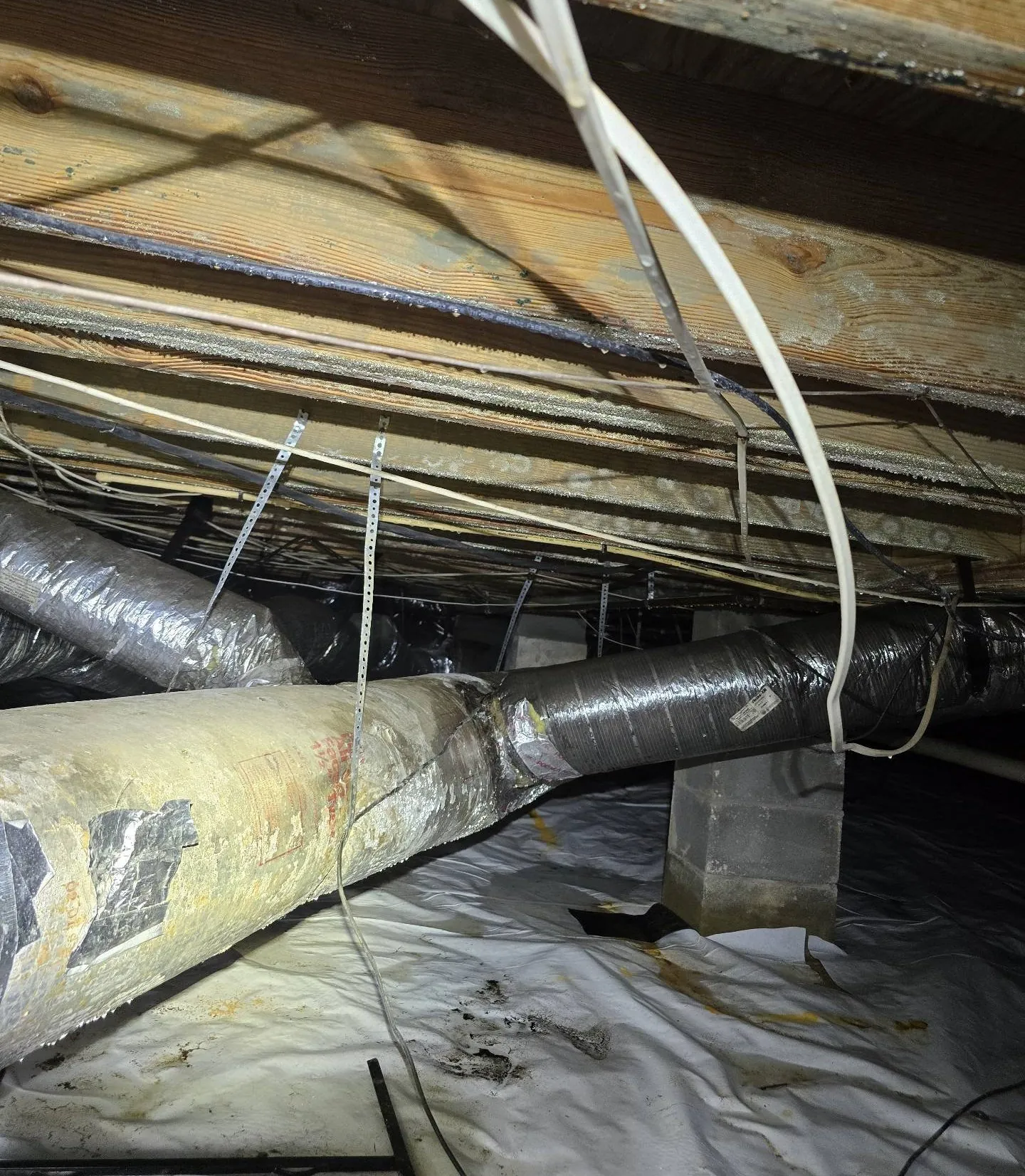
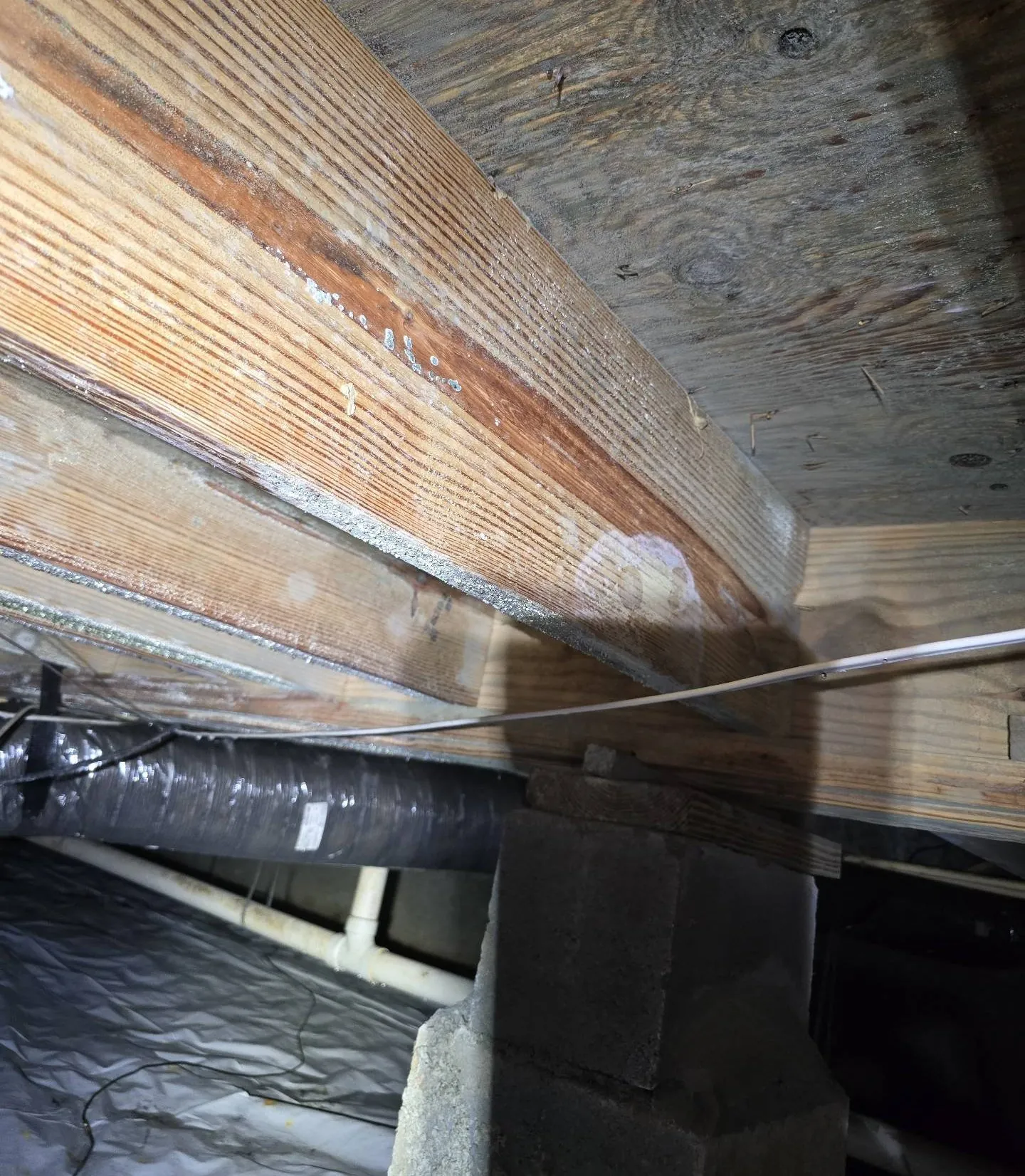
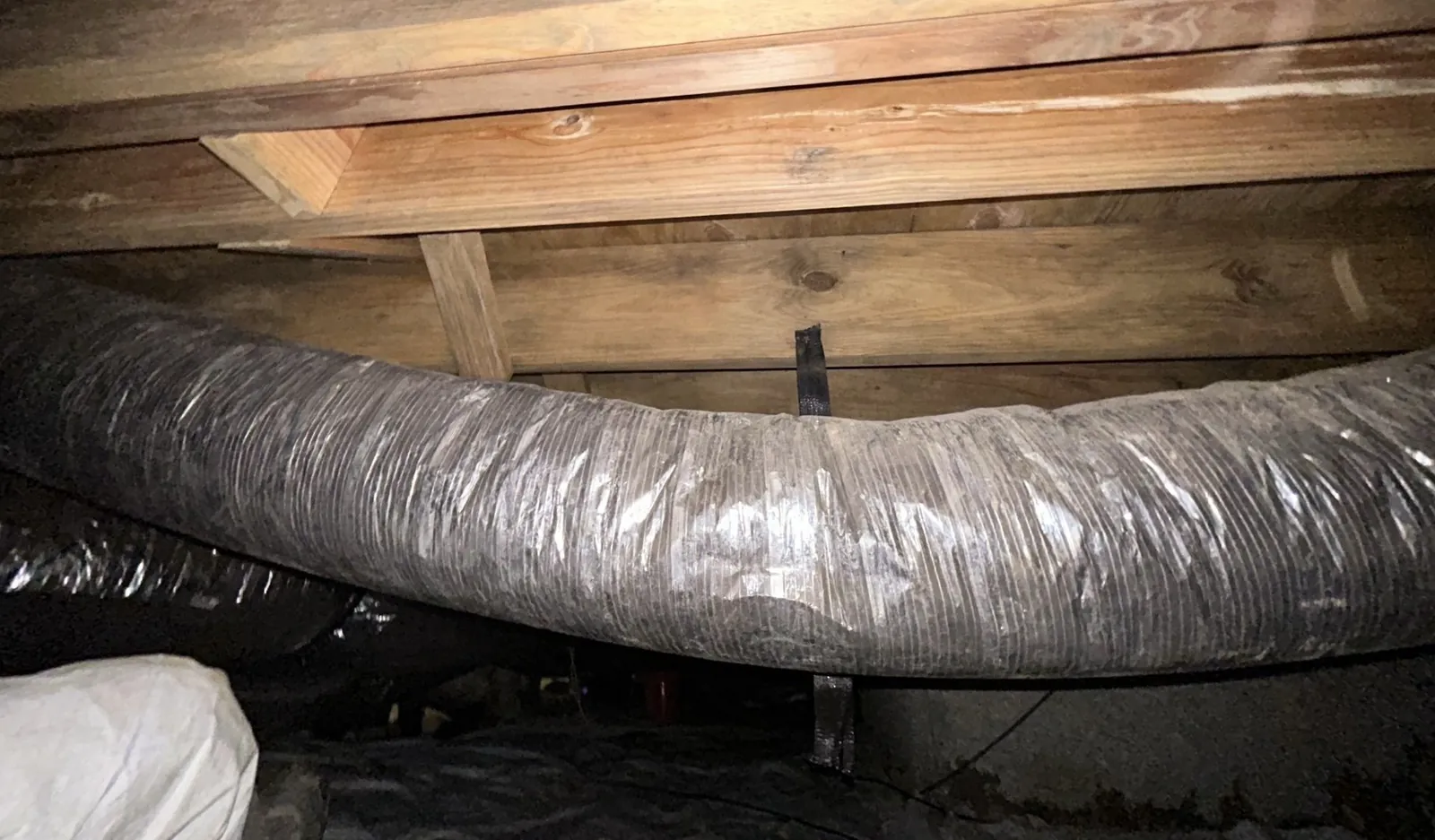
These are photos from a real crawl space job our crew has worked. They show the open, humid conditions that encapsulation is meant to close off.
Ductwork, stained joists and a loose plastic ground cover. Photo from a Spring Hill area job.White spotting on a beam above a block pier and plastic ground cover. Photo from a Spring Hill area job.A flex duct under the joists with a plastic ground cover. Photo from a Spring Hill area job.
FAQ
Crawl Space Encapsulation questions
Will encapsulation stop a musty smell in the house?
Encapsulation stops musty air when the smell is coming from a wet crawl and the finished capsule stays dry. A plumbing leak, an HVAC condensate line draining on the soil, or grade that pushes storm water under the house will bring the odor back. Franklin Crawl Space treats that path first, then seals the space so living-area air is no longer pulled across damp soil and fallen insulation.
Do you encapsulate historic homes near downtown Franklin?
Yes. Downtown Franklin crawls are often low, irregular, and sitting on stone or brick piers with earlier repairs. We measure clearance, photograph the piers, and plan how debris leaves the hatch before we commit to a liner layout. The system is the same—sealed liner, closed vents, drained dehumidifier—but the labor is in the fit-up around those piers.
Is a dehumidifier required after encapsulation?
In Franklin’s climate, yes. A liner cuts soil vapor and closed vents stop outdoor air, but the crawl still needs a machine to hold relative humidity down through summer. We size the unit to the closed volume and drain it to daylight or a pump. A bucket is not a drain. The target and the drain path are written on the estimate.
Can the foundation vents stay open if the liner is sealed?
No. A sealed liner with open vents is still a vented crawl. Summer air in Middle Tennessee keeps entering, condenses on ducts and joists, and makes the dehumidifier dry outdoor air instead of a closed volume. Encapsulation includes closing and sealing the vents. If one opening has a specific structural reason to remain, we deal with that opening on its own.
Should wood repair or mold cleanup happen before the liner?
Yes, when the inspection shows soft joists, a dropped support, or growth on the framing. A liner over damaged wood hides the condition from the next inspector and makes the repair harder. Mold left on joists inside a new capsule is how odor complaints start. We sequence repair and remediation first, then encapsulate the space that is left.